A continuation of Part 1 of this article if you missed it.
HallmarkStarTrekOrnaments.com: Which ornament do you feel best captured the “soul” of its on-screen counterpart?
Lynn Norton: For me, it’s the Enterprise “E” ornament. (There is a lengthy story about its development in interviews with Kevin Dilmore from 2015).
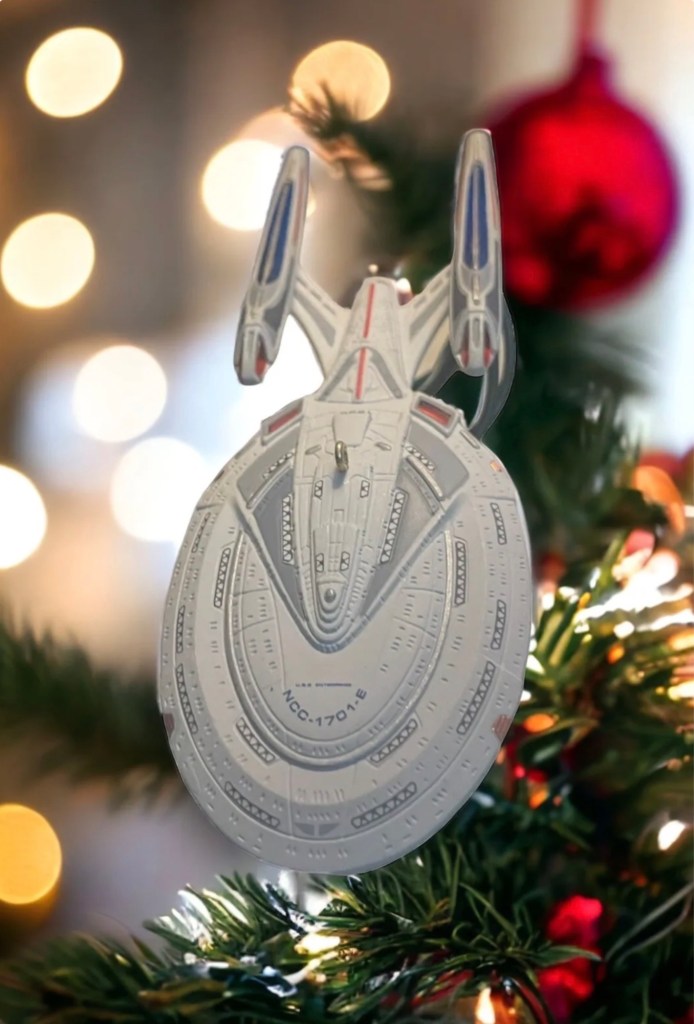
The first time I saw the “E” was on the big screen. Even though a physical filming model was constructed, the model was digitally recorded and seamlessly joined with CG special effects. The results were stunning and I was pleased to sign my name on a product that accurately depicted the on-screen experience.
HSTO: How did advances in ornament technology (pig-tail plugs to battery operated) change what you could do over the years?
Norton: Certainly, the transition to battery power opened up a wealth of new design opportunities and ended troublesome issues with pig-tail power. I covered some of those issues in my interview(s) with Kevin Dilmore in 2015. Getting power from miniature light-strings was always problematic and became even more so in the early 2000s when manufacturers of incandescent light-strings stopped production and shifted to LEDs. Older Hallmark ornaments could not be operated with any other power source. Also, getting approval from UL (Underwriters Laboratory) became troublesome and added three months or more to development. Note: UL required testing of finished product that was scheduled for production. If an electrical issue was discovered, design parameters and production tooling had to be revised and retested. Expensive delays. The transition had to be made, sooner or later.
I eagerly embraced design freedoms and opportunities the transition to batteries allowed, but somewhat saddened that ornaments could no longer be constantly illuminated. That was a very special feature of older ornaments that couldn’t be repeated.
HSTO: Was there a particular ornament that pushed the limits of what Hallmark had done before?
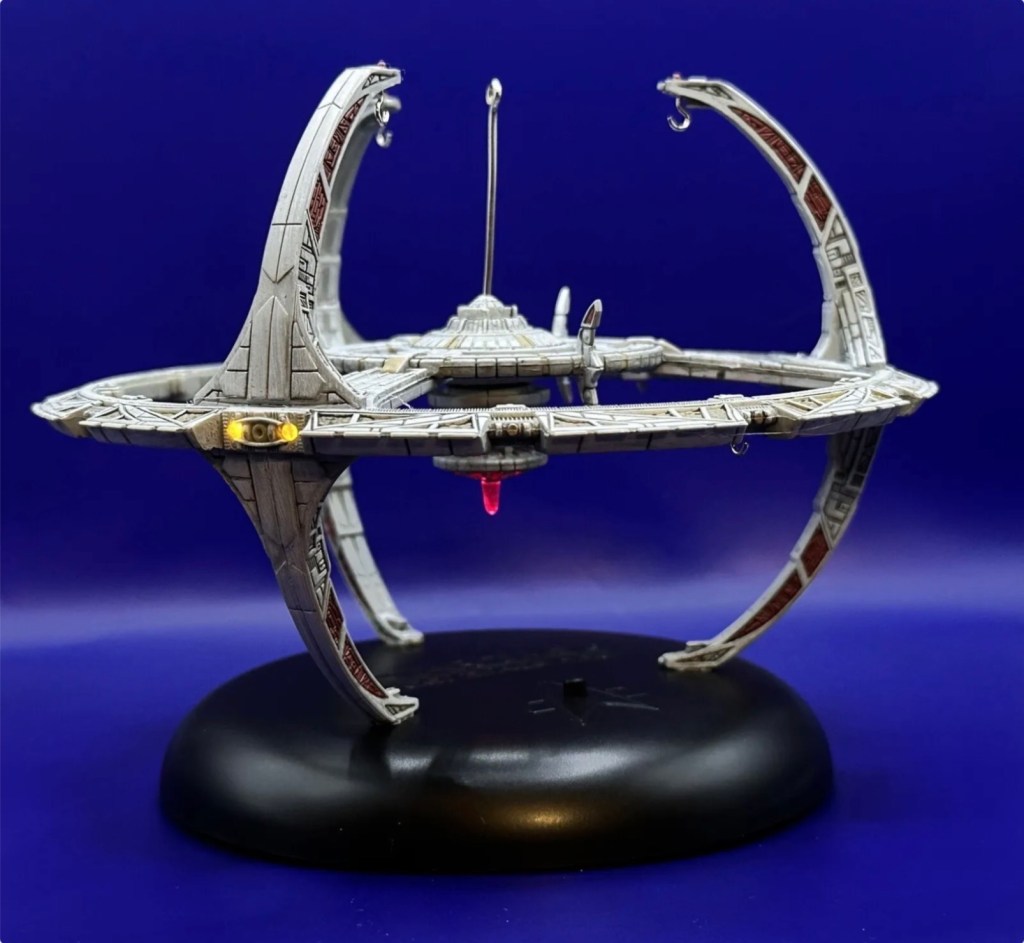
Norton: Yes, the Deep Space Nine Space Station. Prototyping the “beast” exceeded my grasp. Engineer coworkers came to my rescue. Geometric shapes were digitally rendered so each piece fit together perfectly to assemble the complete structure and properly engage electrical contacts on the display base. A nearby vendor (with rapid-prototyping technology) was contracted to produce each part by “growing” them out of liquid photopolymer. Note: The technology was in its infancy at the time and designed to reproduce much larger items. Details were non-existent and I had to resurface everything to create a “blank canvas” before sculpting textures and fine details. It was a team effort.
HSTO: How much problem-solving went into making ships balance, hang properly, or light evenly?
Norton: Balance was never much of a problem. I simply stabbed the prototype with a #11 blade and let it dangle on the tip until the center-of-gravity was located. Manufacturers were instructed to reposition hooks so the finished ornaments would hang level with batteries installed. Photographs on retail boxes and catalogs are often of prototypes. You may have noticed that hook locations on finished products are sometimes installed in slightly different locations.
Uniform lighting was difficult to achieve on ornaments that were internally illuminated with tiny incandescent bulbs. The bulbs radiated light in all directions, so it was always challenging to direct it to the desired location and prevent “bleeding” through structures and assembly joints. LED lights are extremely directional, so “bleeding” was seldom a problem. Light could easily be “piped” through dedicated plastic structures and color changed along the way.
HSTO: Do you have a personal favorite STAR TREK ornament you designed?
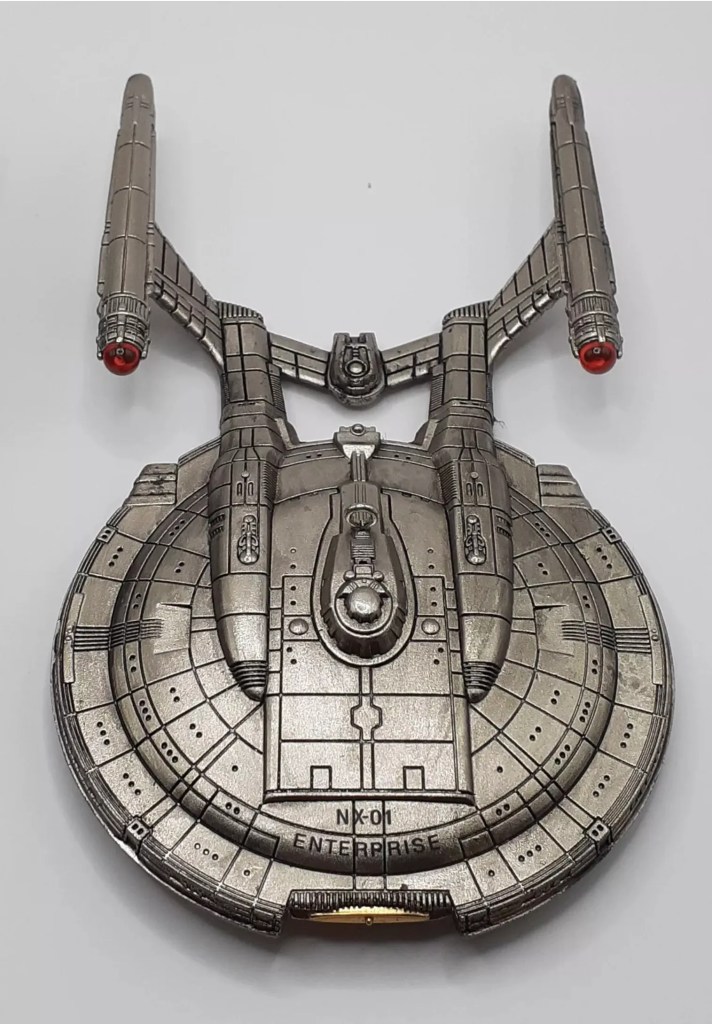
Norton: My personal favorite is ENTERPRISE NX-01. It checked all the boxes. I thoroughly enjoyed how the TV series depicted early deep-space exploration. The ship design was close to what my younger self imagined a starship should look like. It was a joy to sculpt. Tooling and manufacturing quality were spot-on. I always thought sparkling metallic ornaments looked best because they reflected decorative lighting. My only regret is that we (Hallmark) never issued a lighted version.
HSTO: Which ship was the most difficult to get right?
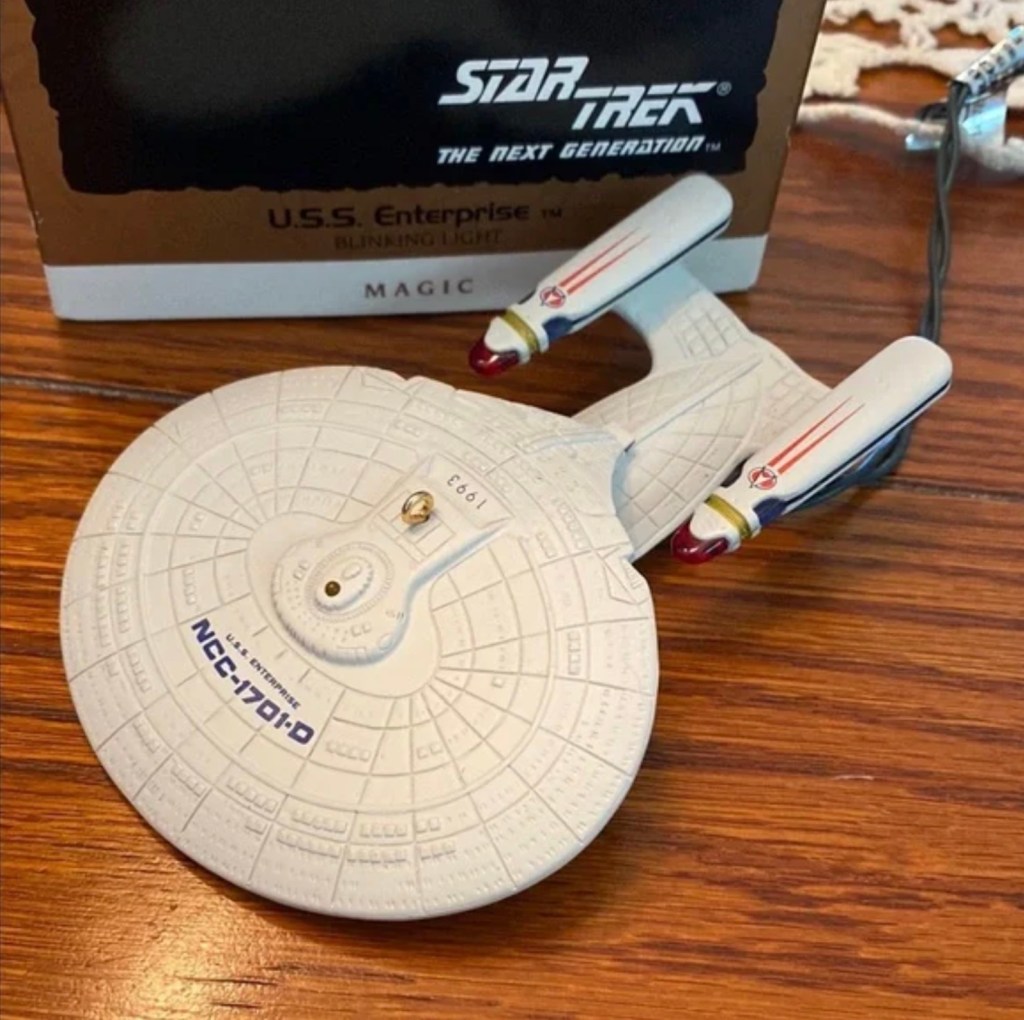
Norton: Decidedly, ENTERPRISE “D” from 1993. ENTERPRISE “D” was the most ambitious ornament design Hallmark had ever undertaken and ultimately challenged my skills as a sculptor/engraver. Reproducing accurate, complex surface details was not commonly required for ornaments of the era. I was scolded for taking too much time to render an original pattern, but when the licensor saw my prototype, they were elated. The project moved forward and I was forgiven for trashing the schedule.
In 1992, I was on a business trip in Asia and visited the facility that was developing molds and production tooling for the ornament. I almost shit myself when I saw delicate surface details butchered beyond recognition. The tool makers weren’t up to the task of executing such a complex design. Fortunately, I was traveling with a product manager and art-director. They both agreed that everything had to be remade. New molds were developed by a different vendor that faithfully reproduced every detail. The finished product was excellent.
This story doesn’t end here. Rejected tooling was given to Willitts Designs (owned by Hallmark at the time) and resized to fit into a USS Enterprise Lighted Star Globe. I suppose they didn’t think imperfections would be obvious at a smaller scale. Wrong! Internal lighting and the lensing-effect of a liquid filled, glass globe exaggerated errors. There are probably very few Willitts Star Globes remaining because they tended to leak and flood internal electronics with acidic fluid.
HSTO: Were you involved with the other globes? I believe there was an original Enterprise and a Klingon Bird-of Prey as well?
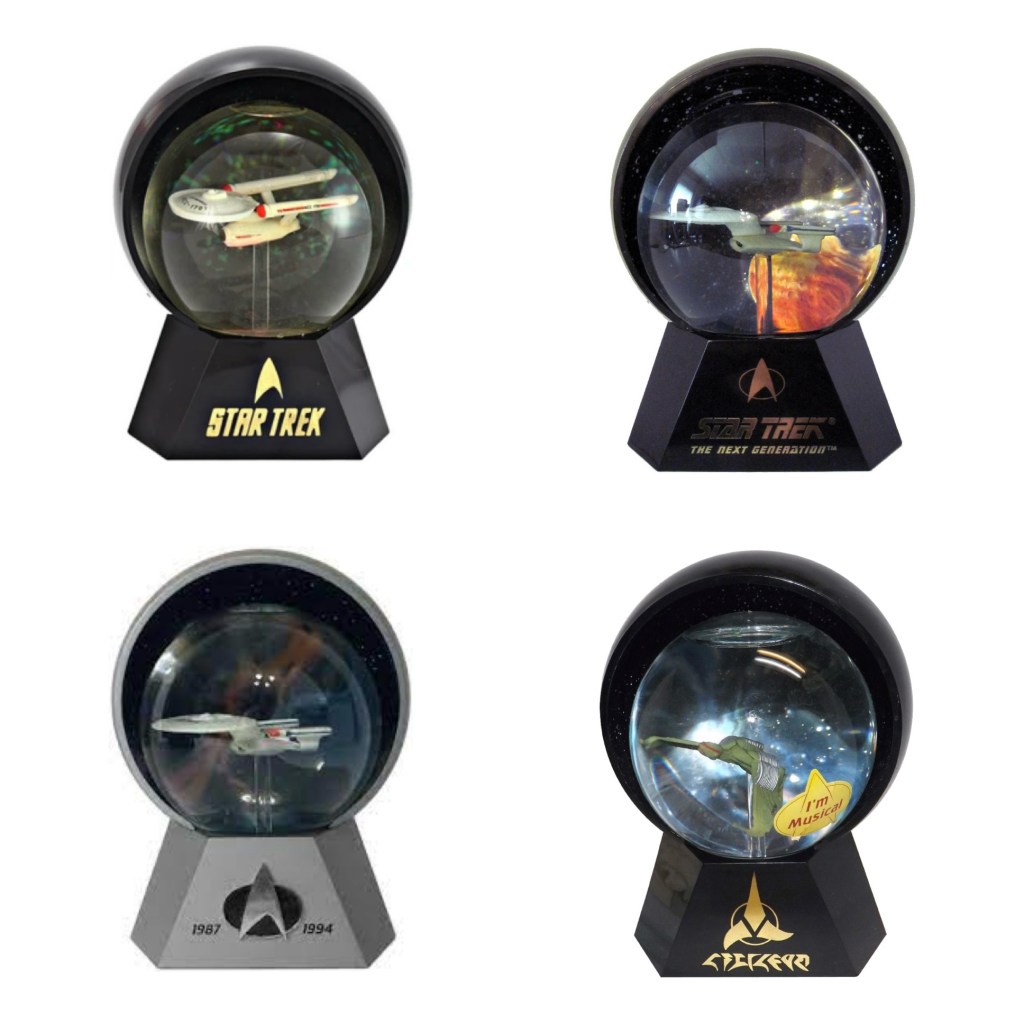
Norton: Yes, some STAR TREK starship models that appeared in Willitts Star Globes were generated by copying original patterns of Hallmark ornaments. They were reduced in size with pantograph machines by tracing a stylus over every surface while cutting tools at the other end carved smaller versions. I’m certain that the original Enterprise, Enterprise “D” and Klingon Bird of Prey that appeared in Star Globes were developed in this manner. Willitts Designs was owned by Hallmark in the 1990s. It’s uncertain if any of their additional STAR TREK products were produced in the same way.
There are more stories about Hallmark STAR TREK ornaments used to produce other products, if you’re interested. I’ve never been sure how much of this information is common knowledge.
HSTO: I know about the screen used ornaments.
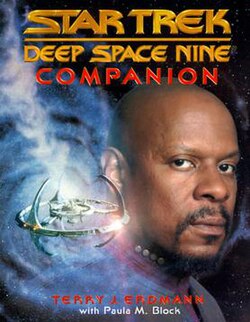
Norton: I’m pleased to hear that you know about Hallmark ornaments that appeared in STAR TREK series episodes. I had speculated about this until documentation appeared in a written article on page 674 of the STAR TREK: DEEP SPACE NINE COMPANION book. Kevin Dilmore helped us determine which ornaments were used in Voyager episodes (Voyager and Klingon Bird of Prey ornaments). We think the other Klingon ship on the mobile was a Johnny Lightening toy but no one at Paramount could verify. Your opinion is welcome.
Another product that remains a mystery was an Enterprise “D” model that was sold by Applause in 1995, branded as STAR TREK: GENERATIONS.
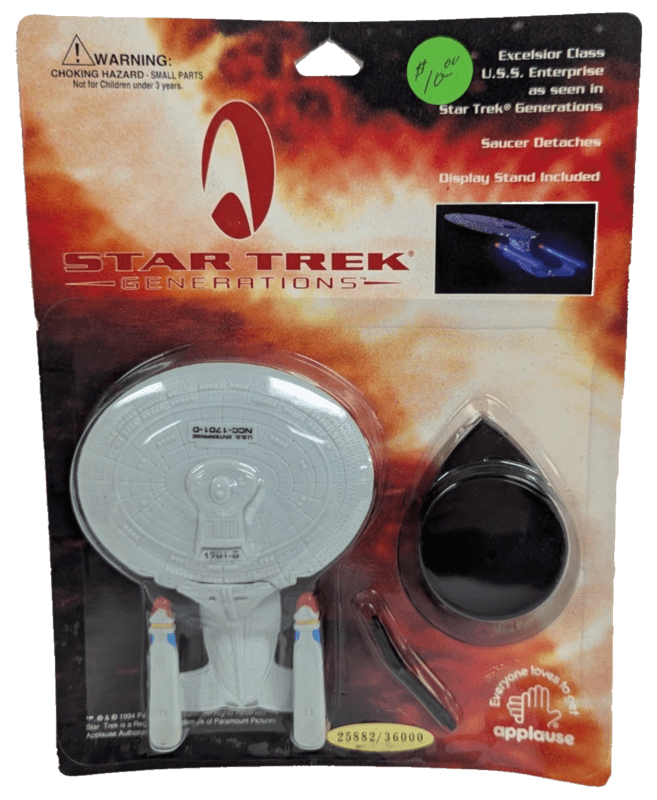
It featured a detachable saucer and display stand. Similarities to the Hallmark 1993 Enterprise “D” ornament caught my attention, so I purchased it for my collection. Upon closer examination, I became convinced that Applause had used an actual Hallmark ornament as a pattern to develop tooling for their ship model. Raised and engraved details (especially on the saucer) were nearly identical to the ornament. The number of windows and escape hatch details were interpretations I’d made during sculpting. Holes for the wire hanger loop, bridge running light and electrical cord were clumsily patched. The deflector appears to have been removed and replaced with a lumpy approximation. Even minor surface imperfections that occurred during manufacturing the ornament were reproduced.
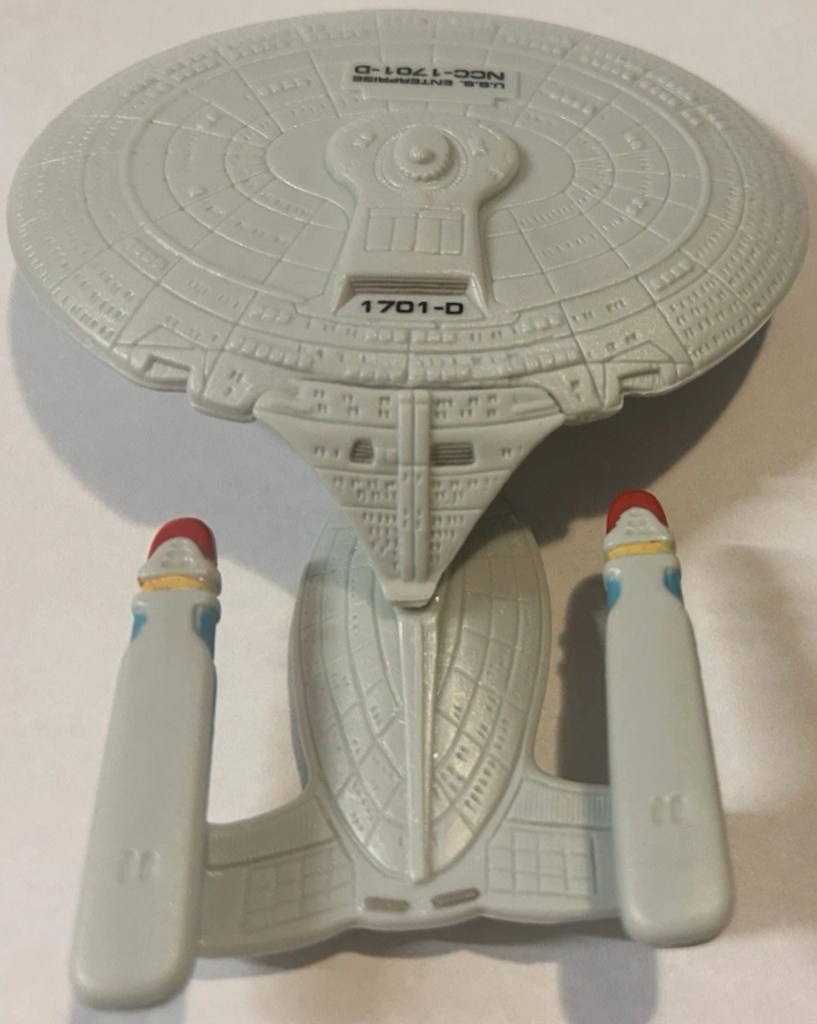
Everything I’ve outlined here are my personal observations. In late 1995, I submitted a statement and documentation to the Hallmark legal department but do not know if any actions were taken or resolved. It’s my opinion that the 1993 Hallmark ornament was “high jacked” to make a product for another company. Note: Your opinion is welcome. If you have the Applause ship in your collection, one can observe most of what I’ve described without opening or damaging the retail package. Use a magnifying glass and bright light to see for yourself.
Finally, I’m delighted that you’ve featured the model I sculpted for the STAR TREK: 50 Artists-50 Years gallery on your website. Inlaid, mechanical details on the hull of the U.S.S Bellwether were extracted from a Hallmark, Borg Cube ornament and embedded in the original sculpture.
HSTO: The only thing that pangs me more than never having a U.S.S Bellwether in my collection is knowing I’ll likely not ever see it on screen. Speaking of that, how does it feel to see your creations on screen? That has to be somewhat surreal, doesn’t it?
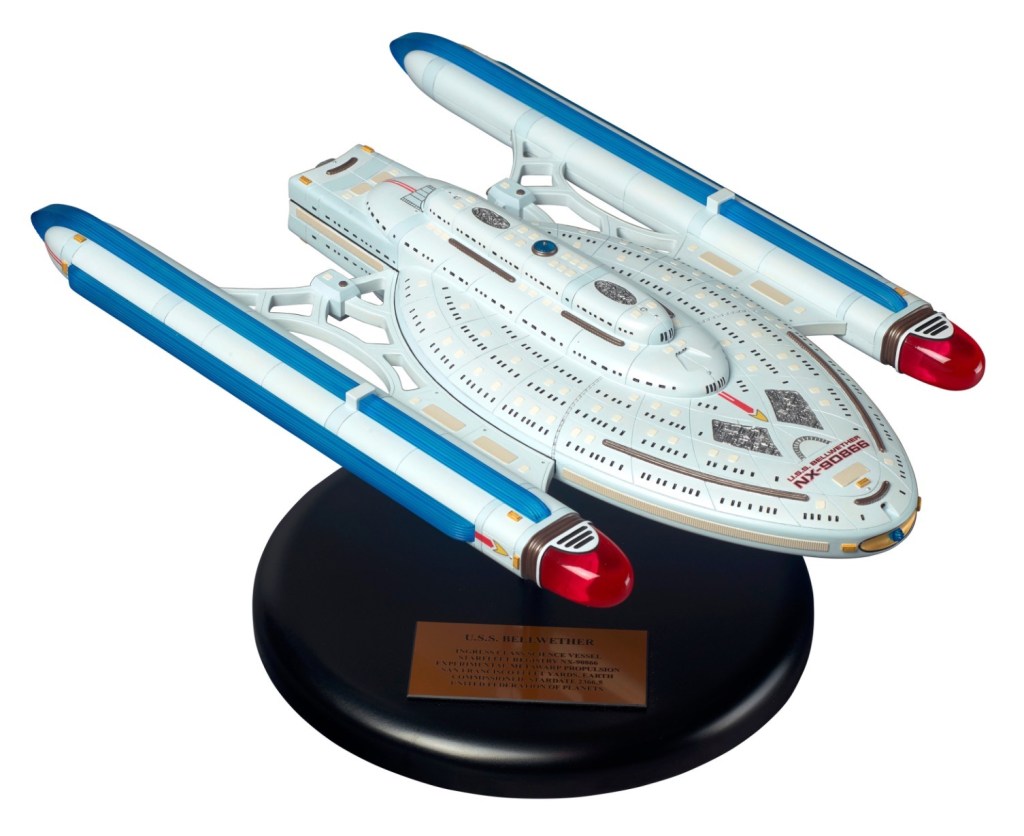
Norton: Even though I created the U.S.S. Bellwether, the design is now the property of CBS/Paramount (whatever) and is theoretically eligible for licensing and reproduction. I’ve hoped to someday see it listed in the official Starfleet registry and maybe even appear in novels and screenplays. Yes, it is surreal to see something I’ve sculpted on screen. It never gets old.
HSTO: Were there any designs that surprised you in how popular they became?
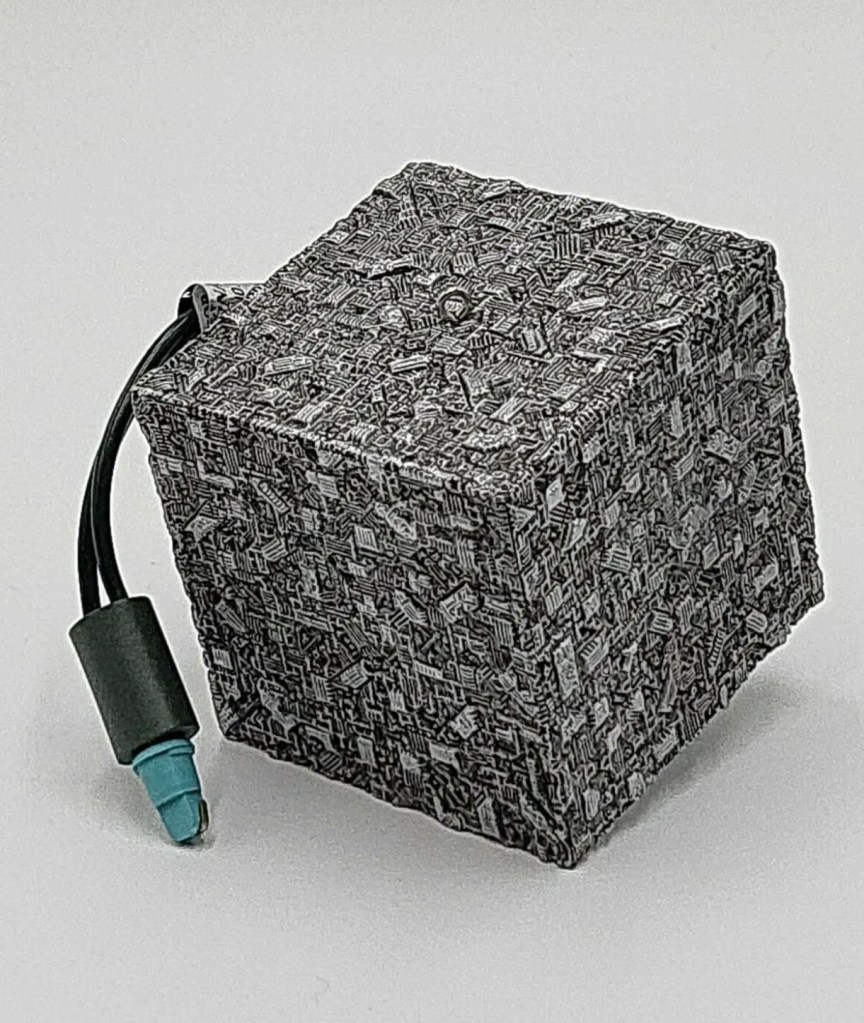
Norton: That has to be the Borg Cube. Artists and directors at Hallmark (non fans) described it as a lump of coal with bad sound effects. They couldn’t understand why I was so eager to sculpt it. Also, it was only the second starship ornament that featured STAR TREK bad-guys. Many of my peers thought it should not be made into an ornament intended to celebrate the “season of peace and joy.” Ho, ho, ho. “Resistance is futile.”
HSTO: When did you first realize how passionate the collector community was?
Norton: When I attended the 30th anniversary STAR TREK convention in Huntsville, Alabama as an exhibitor. Fans visited the Hallmark booth and were genuinely enthused and complimentary, but then stood in line for hours to get actor’s signatures on ornaments I’d created. I (too) became obsessed with getting “captain’s” autographs on my own fleet of ornaments. That turned out to be an expensive hobby after I retired from Hallmark and lost connections. I have to pay for a ticket and stand in line like anyone else. It’s still a work in progress.
HSTO: Did fan feedback ever influence future designs or revisits of earlier ships?
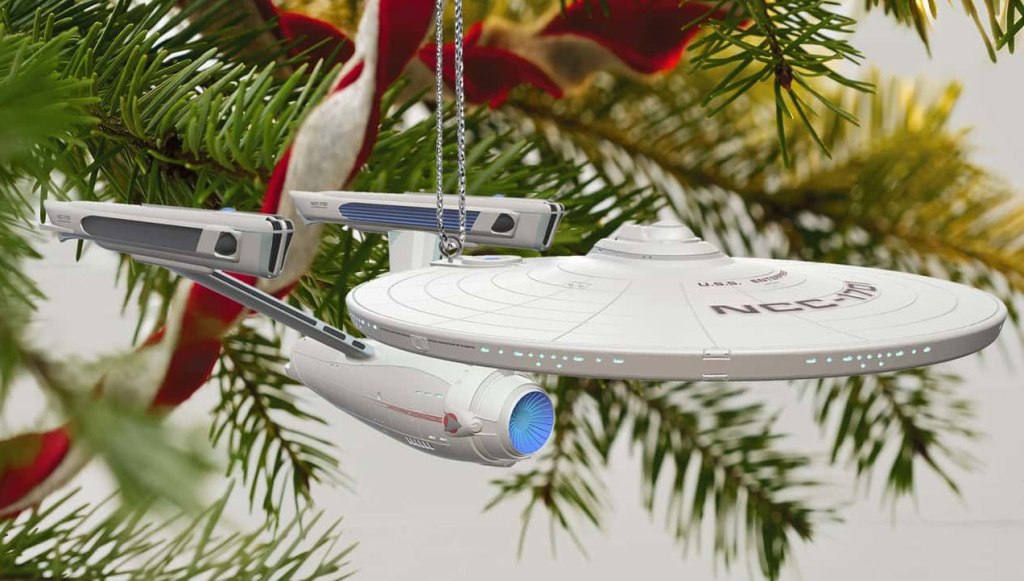
Norton: Yes, the Enterprise “A” refit. I submitted fan letters and emails to the Hallmark product-development-team and licensor to help stimulate interest in making it into an ornament. It may have tipped the balance.
HSTO: Is there a ship you never got a chance to do that you wish you had?
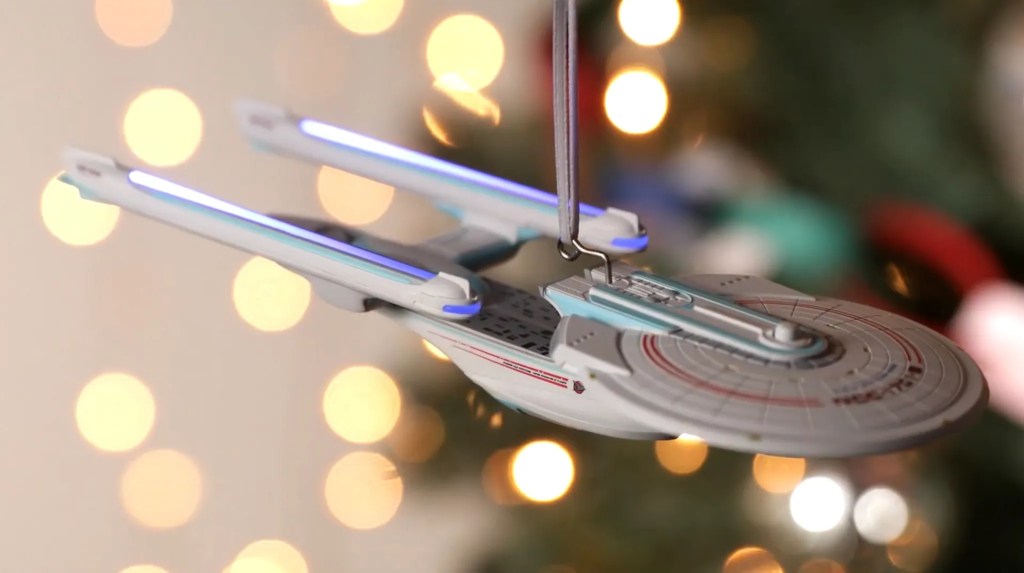
Norton: The Enterprise “B” of course, and some other designs which have since been digitally sculpted by other artists since my participation ended in 2016.
I submitted a Phoenix ship ornament concept shortly after the First Contact movie release. It depicted the Phoenix with light and sound playing the Steppenwolf song, Magic Carpet Ride (1968). I also thought it would be a “hoot” for other artists to design a Phoenix bridge-scene diorama featuring the same song, both ornaments issued in the same year. My concept was not well received.
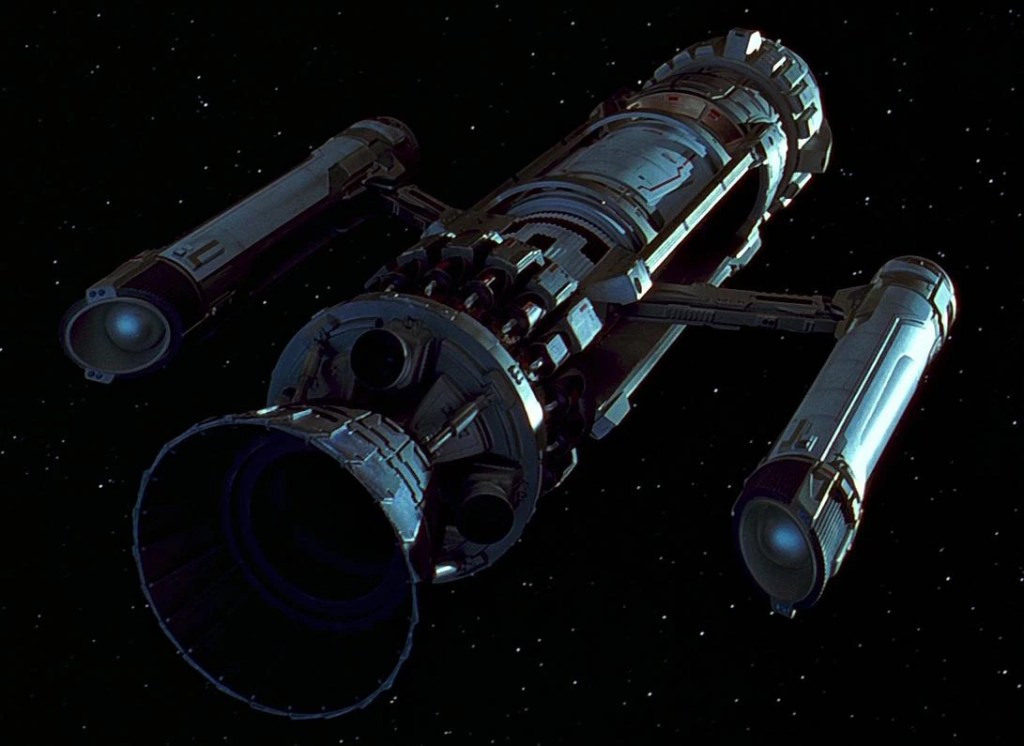
Engineers speculated that an ornament with enough internal space for electronics and a speaker would be quite large and collide with other ornaments in the retail merchandiser. The proposed ornament was described as a circumcised, flying phallus (their words, not mine). Then, where would the hook/hanger be located? Hmmmm. Additional licensing (and royalties) would be required for the song. Needless to say, the Phoenix ornament never got off the ground. “Let the sound take you away.”
HSTO: How do you feel STAR TREK ornament design evolved over the decades you worked on them?
Norton: Retail success of each STAR TREK ornament stimulated interest in producing another, and another. I became more skilled. Tool makers and manufacturers became more capable. Breakthroughs in electronics extended the range of possibilities. Physical filming models were replaced by digital models and digital production. Technology acquisitions at Hallmark made it easier to leverage digital assets to create patterns for ornaments. Digital modeling tools have nearly replaced physical sculpting for licensors and Hallmark. Note: I was unable to make the transition to the digital world, which precipitated my decision to retire in 2006. I’ve continued to sculpt physical patterns in my home-based studio as a contractor. Since retirement, scanning technology has become so robust that hand-carved sculptures and painted prototypes can be converted to digital models with a few keystrokes. I’m still in business.
HSTO: What do you hope collectors notice or appreciate most when they look at your ornaments today?
Norton: That we (Hallmark) exceeded expectations of what decorative, holiday ornaments could be. That our products were well received by STAR TREK collectors and traditional ornament collectors alike. That some ornaments we made are still valued.
HSTO: How would you like your contribution to STAR TREK to be remembered?
Norton: That my passion for STAR TREK is evident in every stroke of pen, sculpting tool and paint brush.
HSTO: What has it meant to you to know your work is part of so many fans’ holiday traditions?
Norton: I’m humbled and pleased to have been given the opportunity to create ornaments for the STAR TREK universe. Fanboy did good.
_____________________________________________________________________

I have always believed that Lynn Norton is the reason Star Trek ornaments are still being created by Hallmark artists today. His artistry and extraordinary attention to detail set a standard that continues to inspire and elevate the line decades later. I am genuinely thankful to Lynn for his generosity, his willingness to answer my questions, and the incredible talents he has shared. His work has brought lasting joy to me and to countless collectors, and it continues to be celebrated and cherished to this day. Thank you, Lynn!

 Hallmark Star Trek Ornaments